
Education’s Shifting Landscape: On-Campus vs. Online
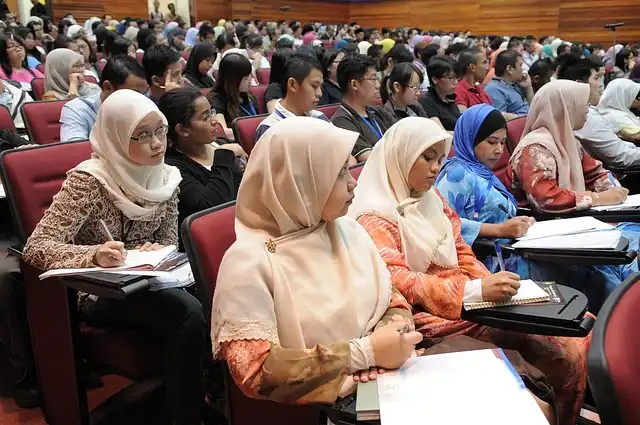
Universities face a dilemma balancing student demand for flexible online courses with the benefits of in-person learning. Declining public funding and the need for enrollment mass challenge the traditional campus experience, impacting course offerings and student engagement.
The fear of “demagogues,” or leaders that cater the masses’ worst instincts, goes back a minimum of to ancient Greece. In the U.S., component of the point of the Electoral College was to prevent the political election of demagogues. A few of us have thoughts on how well that has functioned, along with what those “worst” reactions were, but the concept existed.
And if it was based on a policy setting– most votes aren’t, at the very least directly– did you understand the nuances behind the policy?
Maybe unlike internet stereotypes, the admins with whom I function concur that we ‘d rather see more pupils take in-person courses. The academic end results are much better, dishonesty is tougher and the livelier university includes another dimension to the experience. But as public financing continues to decline and we rely ever before extra on tuition, we do not always have the option of pushing back.
Ballot uses limited information, which’s true whether voting with your tally or with your feet. When you picked Smith over Jones, was it due to a policy setting, an event identification, individual familiarity, or because you liked their name better? And if it was based upon a policy position– most ballots aren’t, a minimum of straight– did you understand the nuances behind the plan?
The Allure and Drawbacks of Online Courses
Some trainees have actually chosen up on that, and they desire to restore what has actually been lost. The market wants what the market desires, and we don’t have the financial breathing area to ignore it.
When online courses were fairly new and enrollments were a great deal higher, it was much easier to see on-line classes as ways to increase access for people that otherwise could not attend. Asynchronous on the internet classes function well for working grownups, people with hefty caregiving duties and those with wheelchair problems. They likewise worked to assist trainees with tasks build some flexibility right into their routines.
My associates and I do not intend to go back to the days before online classes (or dual registration, for that issue). However we want to see more trainees roaming the halls, speaking with each various other and seeing what they’ve been missing. I can’t assist but wonder how much of their voting with their feet shows not recognizing what they might have had.
Balancing Access and Academic Rigor
Gradually, though and specifically considering that the pandemic, on the internet classes have come to be the brand-new typical in what we used to call “chalk-and-talk” disciplines. Between twin registration and online classes, the physical presence of timeless gen ed courses on university just isn’t what it made use of to be. That has a predictable effect on school life.
The influence is unequal across techniques. We don’t provide welding or oral hygiene online, for apparent factors. Nursing, culinary, phlebotomy, a/c and so on actually need to be taught face to face. Those fields are likewise fairly AI-proof in the sense that, state, Anthropic isn’t mosting likely to weld that pipeline for you. That aids, but it still leaves genuine gaps.
Impact on Campus Life and Course Offerings
Individuals don’t constantly understand what they want, or what’s implied by what they want, or how a provided plan is likely to influence their possibilities of getting what they desire. I’m seeing it in the push-pull of students wanting an extra robust on-campus university experience while simultaneously crowding into on the internet classes. When on-line courses were relatively brand-new and enrollments were a lot higher, it was easier to see online courses as methods to increase gain access to for people who otherwise couldn’t participate in. In between double registration and online courses, the physical presence of timeless gen ed courses on campus simply isn’t what it utilized to be.
A few weeks earlier, we had a trainee speak-out on university, in which pupils might ask any kind of concerns they wanted of university management. The unpleasant however real solution is that to make the budget job, courses require crucial mass of enrollments.
Political researchers have long splashed ink over the “oblivious voter” issue (or the “false consciousness” trouble, if you prefer). People do not always recognize what they want, or what’s indicated by what they want, or how a given policy is most likely to impact their chances of obtaining what they desire. It isn’t a brand-new concern. John Stuart Mill recommended providing educated individuals a lot more votes than much less enlightened people, on the theory that they would certainly be much better able to take the viewpoint than the shortsighted masses. (As it occurs, enlightened individuals can be shortsighted, also …).
The ‘Oblivious Voter’ in Education
Contrasting needs play out past electoral politics. I’m seeing it in the push-pull of pupils desiring a more durable on-campus college experience while at the same time crowding into on-line classes. The wish for a durable on-campus experience conflicts with the wish for a convenient schedule.
1 affect higher education2 education trends
3 on-campus experience
4 online learning
5 student engagement
« New Loan Limits May Restrict Student Access to Healthcare CareersUniversity Faces Layoffs Amid Funding Cuts & Program Suspensions »