
Columbia’s Troubled Path: Navigating Trump-Era Scrutiny and University Autonomy
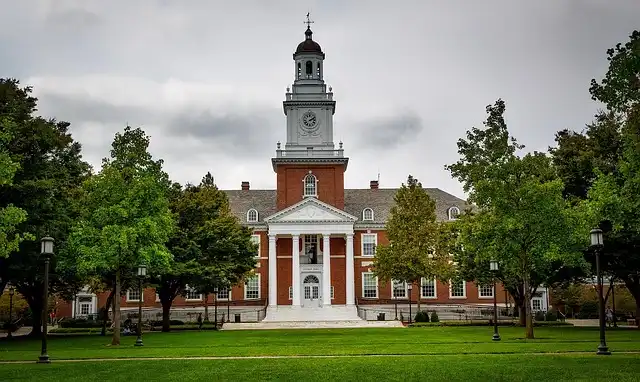
Columbia University faced intense scrutiny and a significant settlement with the Trump administration over antisemitism complaints. This led to changes in curriculum and oversight, sparking debate on academic freedom and institutional responses to government pressure.
The Fallout of the Columbia Settlement
Can Jennifer Mnookin Heal Columbia?; This Term Shook My Faith as a Teacher; The Brain Trust Fueling Trump’s War on Greater Ed; Rebecca Tuvel Was Terminated. It Was the Best Point to Ever Before Take Place to Her.
Instead, the bargain has actually created an anxious atmosphere in which some components of school life are business as usual, in spite of past analysis; some have been altered by government activity unconnected to the deal, such as an across the country stagnation in research funding; and every significant modification seems to attract allegations of pandering.
Join your colleagues from throughout higher education for conversations including leading thinkers and Chronicle reporters checking out exactly how establishments can construct trust fund throughout modification with mentor, leadership, and work-force innovation. Register currently for this totally free virtual event.
Campus Climate and Faculty Concerns
“The atmosphere is stifling, and individuals may be worried about what’s happening, however will rarely speak openly,” said Jeanine D’Armiento, chair of the executive committee of Columbia’s University Us senate and a teacher at the clinical college.
Columbia was the initial organization where officials withheld hundreds of countless dollars in research study funding over complaints that it had countenanced antisemitism on university. The pattern soon duplicated at Princeton, Brown, Cornell, Northwestern, and Harvard Universities.
Columbia’s Response and Initiatives
The university guaranteed to “create training products to mingle all pupils to university standards” and to guarantee “all pupils, worldwide and residential,” are “committed” to worths such as “civil discourse, free query,” and “open debate.” This loss, Columbia worked with a nonprofit, Interfaith America, to integrate civil-dialogue shows on campus, including workshops for first-year undergrads.
Homeowner advisers in the dorms needed to lead the workshops. They nearly rebelled, the Columbia Daily Viewer reported. They discovered their training product poor and disliked being part of what they saw as fulfilling the government offer. “Our operate at Columbia– or any kind of university– is independent of anything pertaining to the federal government,” a speaker for Interfaith America wrote in a statement to the Viewer. “Columbia’s deal with Interfaith America was not associated with the agreement with the federal government and the advancement of the program long preceded any discussions with the federal government,” a Columbia agent included a statement to The Chronicle.
“The arrangement ensures that we can continue to pursue our core academic objective without jeopardizing our fundamental worths,” wrote a representative for Columbia in a declaration. “Progressing quality in the areas of teaching, study, individual care, and scholarship is core to the university’s mission and case in the normal training course.” The give financing that had actually been held back for the offer has been restored.
One year after Columbia signed its resolution arrangement, the university stays something of an example, for others in the sector and for the Trump administration. However what several have actually called Columbia’s capitulation hasn’t been a complete win for either side.
Columbia was the first institution where authorities kept numerous millions of bucks in study funding over accusations that it had actually sanctioned antisemitism on university. The pattern quickly repeated at Princeton, Brown, Cornell, Northwestern, and Harvard Colleges.
He claimed that in his very own department, chemistry, he has actually seen no tasks aimed at interacting socially trainees to campus– even though he and several of his coworkers are international trainees, and scholars from exterior of the United States seem to be of unique worry to the Trump management. Eighty-five percent of Columbia’s global pupils are signed up in graduate programs, according to the latest yearly record from the university.
Throughout higher education, Columbia’s settlement and settlement brought a basic cooling of speech along with some circumstances of more powerful pushback, including suits against the Trump administration. Only a few little universities indicated they wished to authorize the “Compact for Academic Quality in College” that the Department of Education later provided, which guaranteed advantageous funding to organizations that adhered to “the priorities of the U.S. federal government.”
The Wider Impact on Higher Education
The majority of university leaders acknowledge a need to avoid straight-out dispute with the Trump management. Some see a benefit in trying to collaborate with the White Home. None have actually reached Columbia in acquiescing to the administration’s needs.
A record regarding the college’s progress towards satisfying regards to the arrangement, published in April, talks about antidiscrimination and civil-dialogue trainings that pupils have to take. Yet at least several of those trainings are just needed of new pupils.
Columbia was after that the initial to authorize a wide-ranging offer to clear up those antisemitism cases, agreeing to terms that covered not just Jewish pupil life on school, but also admissions, faculty hiring, the oversight of several scholastic units, and a lot more– a shopping list of college operations that traditionalists have actually slammed.
Specific Departmental Scrutiny
Universities find themselves in monetary turmoil. Just how can they respond? This report takes a look at how cutting-edge institutions are adapting to a new financial fact and finding methods to grow in spite of headwinds.
One small academic department at Columbia got intense examination from the Trump administration. Columbia performed the testimonial, but left MESAAS alone.
4 faculty members in the division, consisting of Gil Z. Hochberg, the chair, didn’t react to telephone calls and emails from The Chronicle. In an interview with Ahead, a Jewish news magazine, Hochberg said: “No demands, tips, recommendations, modifications were made or imposed by the college on MESAAS as a department. (In a previous interview with The New York Times, she stated her department is not antisemitic: “The only point I promote is the right for all people to have legal rights.”).
Leaving MESAAS untouched, while increasing scholarship concerning Israel elsewhere, falls in line with initial suggestions from the regional-studies review mandated by Columbia’s agreement with the White House. That evaluation even particularly recommended that an undergraduate major or small provided by the public-affairs institution can accomplish the goal of increasing the undergraduate educational program on the Middle East. The add-don’ t-subtract method additionally partially complies with suggestions from the university’s inner antisemitism job pressure, which had actually advised hiring much more tenure-track professor with experience in the Middle East that are “not clearly anti-Zionist.”.
None have gone as much as Columbia in acquiescing to the administration’s needs.
Still, some modifications on school resemble simple success for the Trump administration. The government’s “precondition” letter required Columbia relocate oversight of pupil technique from the University Us senate, which includes professors and trainee members, to the president’s workplace. Columbia placed it under the provost’s workplace much less than two months later. The college took on the International Holocaust Remembrance Alliance’s interpretation of antisemitism, which the Trump administration championed. It assured to keep school a force of 36 police officers with apprehension power for the three-year period of the agreement.
Jonathan Butcher, acting supervisor of the Center for Education And Learning Policy at the traditional Heritage Structure, explained the criterion established by the contract in a different way. “It has demonstrated for schools that the administration is serious regarding the issue of antisemitism and securing civil liberties,” he claimed.
“Columbia’s job with Interfaith America was not related to the agreement with the federal government and the growth of the program long preceded any type of discussions with the federal government,” a Columbia agent included in a statement to The Chronicle.
Avery W. Katz, an agreements professor at Columbia Law College, has taken to the class to explore the settlement. Katz started teaching a workshop in the springtime about the agreement, examining its enforceability, obscurities, and the role of the resolution display. Katz claimed he created the class since he “assumed that there was a reasonable amount of misunderstanding in the community concerning what the agreement really supplied.”.
Shifting Interpretations and Oversight
The Institution of International and Public Matters had considered offering an undergraduate significant for years, professor informed the Spectator. In presentations to the University Senate, Columbia’s leaders have rejected that the significant has anything to do with the Trump bargain.
The Chronicle of Higher Education is academe’s most trusted source for independent journalism,.
profession growth, and positive intelligence. Our viewers lead, teach, discover,.
and introduce with insights from The Chronicle.
Eighty-five percent of Columbia’s global pupils are enrolled in graduate programs, according to the most current yearly report from the university.
Back in December 2024, as President Trump was preparing to get in workplace for the second time and Linda McMahon awaited confirmation as education secretary, Max Eden, after that a fellow at the American Business Institute, famously composed: “To frighten colleges straight, McMahon must begin by taking a reward scalp. She must simply destroy Columbia College.”.
Academic Debate and Legal Analysis
Some professor really felt the authorization for the major was rushed, the Spectator reported. (An agent contacted the Viewer that the process was “deliberative and consultative.”) In an interview with The Chronicle, Robert Newton, an oceanographer and assistant of Columbia’s chapter of the American Association of University Professors, called the new major “by design, a pro-Israel program.” New curricular offerings on the Middle East are assumed to fall on the various other side if MESAAS has actually been slammed as too anti-Israel. “It’s kind of humiliating, if absolutely nothing else, that the institution has actually decided to start a bachelor’s degree which has an explicit ideological border to it,” Newton stated.
The resolution contract “has emboldened the administration and incentivized other universities– the majority of which do not have Columbia’s deep pockets– to preemptively accede to the administration’s sweeping needs,” Nadine Strossen, an emerita professor at New york city Law College and a former president of the American Civil Liberties Union, composed in an e-mail. “Even worse yet,” she wrote, “the Trump II techniques will likely be embraced by any future administration to reshape universities in accordance with its own policy choices.”.
And Columbia has acted as a cautionary tale to several of its peers. When the information damaged this year that Yale University dealt with a considerable federal investigation over cases that it differentiated in admissions, teams standing for professors pupils, alumni, and participants placed a coordinated campaign to press Yale leaders not to clear up, The Chroniclereported. Professor spoke with their counterparts at Brown, Harvard, and Columbia to strategize.
Curricular Changes and Controversy
One tiny scholastic department at Columbia obtained intense scrutiny from the Trump management. The government’s “precondition” letter demanded Columbia move oversight of trainee technique from the College Us senate, which consists of faculty and student participants, to the president’s office.
A number of various other famous colleges have since signed take care of the Trump administration. Others might do so in the future. So far, none have actually agreed to a settlement pricey or as extensive as Columbia’s.
Some institutions, including Harvard and the California State College system, have replied to the Trump administration’s investigations and moneying cancellations by testing its claims in court.
The bargain enlisted an outside screen to inspect that both parties were maintaining their promises. A person at Columbia with expertise of the bargain’s enforcement informed The Chronicle that the screen, Charles J. Cooper, has practically no visibility on university. (Cooper did not respond to an ask for remark.) Instead, the source stated, Columbia’s inner resolution manager, Jim Glover, “speaks to the monitor and gives records to the screen.” The source was granted anonymity to easily talk about the internal workings of the bargain.
Beyond MESAAS, a flurry of activity has actually broadened teaching concerning Israel. In its April progress report, the college promoted brand-new visiting-faculty consultations in the economics and background departments and the School of International and Public Affairs. The international-affairs school additionally began a brand-new undergraduate significant that will offer a number of electives concentrated on the Middle East. That’s verified controversial.
Columbia publishes yearly records regarding harassment and discrimination issues versus its employees, however a change in just how the report was structured in the 2024-25 scholastic year makes it tough to contrast data with that of prior years. What’s clear is that Columbia has actually dealt with even more harassment instances every year given that at the very least 2020.
1 academic freedom2 affect higher education
3 Columbia University Health
4 NCAA settlement
5 Trump administration
6 university autonomy
« US Higher Education’s Financial Rollercoaster: Losses, Recovery, and Future OutlookAmerican U. Interim President Turns European Bike Trip into $170K Scholarship Fundraiser »