
Student Protest Surveillance: AI, Privacy, and Free Speech on Campus
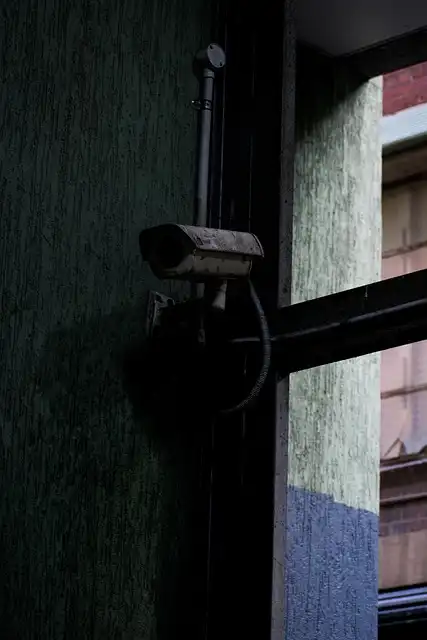
AI-driven surveillance on campuses threatens student speech and privacy, echoing historical suppression of activism. Universities face financial strain while balancing security with free expression.
Historical Context of Student Activism
Pupils have actually historically played a critical role in activities for political change. The trainee lunch-counter sit-ins throughout the civil-rights period and the nationwide school protests against the Vietnam War are amongst one of the most renowned examples. With impact comes scrutiny: In the 1960s and 1970s, J. Edgar Hoover, the well-known Federal Bureau of Investigation director, utilized a variety of extralegal means to suppress and keep an eye on pupil advocacy.
While school security is an inevitable consideration, it can not be made use of as an excuse to squash trainee speech. It is component of a continuous, historically laden conversation bordering student protest, irritated by 21st-century apprehension regarding extreme information collection.
The Balancing Act: Security vs. Speech
“The Division of Homeland Security’s contracts with Babel X and Palantir enable comprehensive monitoring that can be made use of versus international trainee militants.
While school security is an inescapable factor to consider, it can not be made use of as a justification to stomp trainee speech.
AI’s Preemptive Self-Censorship Effect
The kind of universal tracking enabled by AI can be having a preemptive self-censorship result. Study has found that just the knowledge that a person is being observed might suffice to hinder speech or assembly with similar peers. Maybe that’s one reason the lawn has been so vacant lately.
Studentsattend establishments of higher education to study, not to be researched. If we fail to have the ballooning security device, it is not simply the future of trainee speech that goes to risk: it is the college itself.
As a Harvard student I more than happy to report that nowadays, we delight in untainted milk. Although we have bigger problems than spreads that “stinketh,” we don’t appear to have the same passion to take to the roads. In addition to
In a referendum this springtime, 89.6% of students voted in support of terminating the college’s agreement with ZeroEyes. (Similar pupil backlash has developed at the University of Wisconsin at Madison and Emory University.).
Also if the law does not obligate exclusive institutions to respect pupil speech, their very own objective statements should. Protest becomes part of the strenuous difference that makes it possible for intellectual exploration, which universities and colleges strive to promote. Objecting to standard knowledge thrusts understanding production and prepares students for public life. Put simply, colleges are powered by open discourse.
Even when students are aware they’re being surveilled, existing guardrails do not supply us with adequate avenues of redress. Of the 52 agencies studied in a Georgetown College report on authorities usage of face recognition, only one is specifically forbidden from using it to target those engaged in constitutionally secured speech.
Financial Challenges and Campus Adaptation
Colleges locate themselves in monetary chaos. Just how can they respond? This record examines how cutting-edge organizations are adjusting to a brand-new economic truth and searching for ways to prosper despite headwinds.
AI Surveillance Tools and Their Use
Universities are significantly transforming to AI-enhanced monitoring devices. One example is the algorithmic AI software application from a firm called Navigate360, which checks social media sites and organization-owned email represent web content pertaining to self-harm, dangers, or violence. While the company has denied that the software can be made use of to track objections, an examination by The Dallas Morning Information uncovered that its very own advertising agents notified universities that the tool might be made use of for “mitigating” and “detering” protests, and thatat least37 colleges across the nation were utilizing it to do just that. In 2019, for instance, the College of North Carolina at Church Hill used it to check presentations versus a Confederate statuary.
During the elevation of the pro-Palestine university demonstrations at Columbia College, a software application engineer named Eliyahu Hawila began using a mathematical facial-recognition device to determine covered up trainee militants. In a referendum this spring, 89.6% of students voted in support of canceling the university’s agreement with ZeroEyes. (Comparable student backlash has actually emerged at the College of Wisconsin at Madison and Emory University.).
Colleges to Watch: St. John’s College Is Odd. Perhaps Yours Needs to Be Extra Like It.; The University That Chose to Shrink; Colleges Feared Stackable Credits. Now They’re Betting on Them.; For Enrollment-Strapped Tiny Colleges, ‘Apartment Is the New Growth’; The Ungovernable College
The Chronicle of Higher Education is academe’s most trusted resource for independent journalism,.
occupation advancement, and progressive intelligence. Our readers lead, show, find out,.
and innovate with understandings from The Chronicle.
From risks to scholastic liberty to international conflict, there’s no scarcity of protestable issues. What’s going on? A number of aspects are at play, including government examination and altered campus-protest policies in the aftermath of October 7th. But there’s also an underlying threat that converges with the extra apparent political variables: Modern technology, especially artificial intelligence, has created a substantial, data-hungry surveillance apparatus. If possessed abusively, AI-assisted monitoring threatens complimentary expression and circumvents human-rights laws, posturing a serious threat to the university as we know it.
Facial Recognition and Bias Concerns
Join your coworkers from across college for discussions including leading thinkers and Chronicle reporters exploring just how organizations can build depend on during modification through work-force, mentor, and leadership development. Register now for this complimentary virtual occasion.
As a Harvard student I am happy to report that nowadays, we appreciate unspoiled dairy. But although we have larger issues than spreads that “stinketh,” we don’t seem to have the same passion to require to the streets. Other than graduate-student picket lines and the periodic half-hearted political demonstration, the backyard has been quite quiet lately. And we’re not the only campus where protesters have actually gone mum.
Ensuring Privacy and Accountability
In order to secure student speech, we require meaningful legislation that makes clear personal privacy legal rights in the age of AI-enabled monitoring. At the minimum, surveillance of protesters must be targeted and proportional to the threat. Greater transparency and responsibility throughout the board will certainly aid guarantee that ourFirst and Fourth Change legal rights are maintained, both on and off campus.
Certainly, universities are not the only surveillants. Government and regional police, private business, and also people are maintaining tabs on student protest. Cops departments have begun acquiring Enormous Blue’s Overwatch, which makes use of anthropomorphic AI representatives to engage with suspects via text messaging and social media. Among the “personalities” in their collection is a radicalized “demonstration identity,” a divorced, lonesome woman with no children that is “looking for meaning.” There are also various other protest-related characters, such as “external employer for demonstrations” and, unsurprisingly, “college militant.” The Department of Homeland Safety and security’s agreements with Babel X and Palantir allow detailed tracking that can be utilized against worldwide pupil protesters.
In April, William and Mary’s associate vice president for public safety and security, High cliff Everton, assured the Trainee Assembly Us Senate that “ZeroEyes offers important space and time for William and Mary PD to respond in case of a firearm detection.” Everton and other university managers are ideal that there are legitimate security hazards that make it unrealistic to prevent checking campus activity completely. Student militants themselves might endanger neighborhood members by destroying property or taking part in physical violence.
At the same time, during the elevation of the pro-Palestine school demonstrations at Columbia University, a software application engineer named Eliyahu Hawila began using an algorithmic facial-recognition device to identify covered up trainee protesters. He sent several of their names to groups pressing for their deportation. People of color might also be disproportionately impacted by AI-assisted surveillance. As an example, facial-recognition algorithms have predispositions that might bias them versus nonwhite skin tones, leading to overpolicing and wrongful apprehensions.
1 affect higher education2 AI surveillance
3 campus security
4 data privacy
5 free speech
6 Student Protests
« Rethinking Higher Education: Cultivating Critical Thinking in the Age of AIHouse Republicans Propose Bills to Realign Education Department’s Interagency Agreements »